Our Club
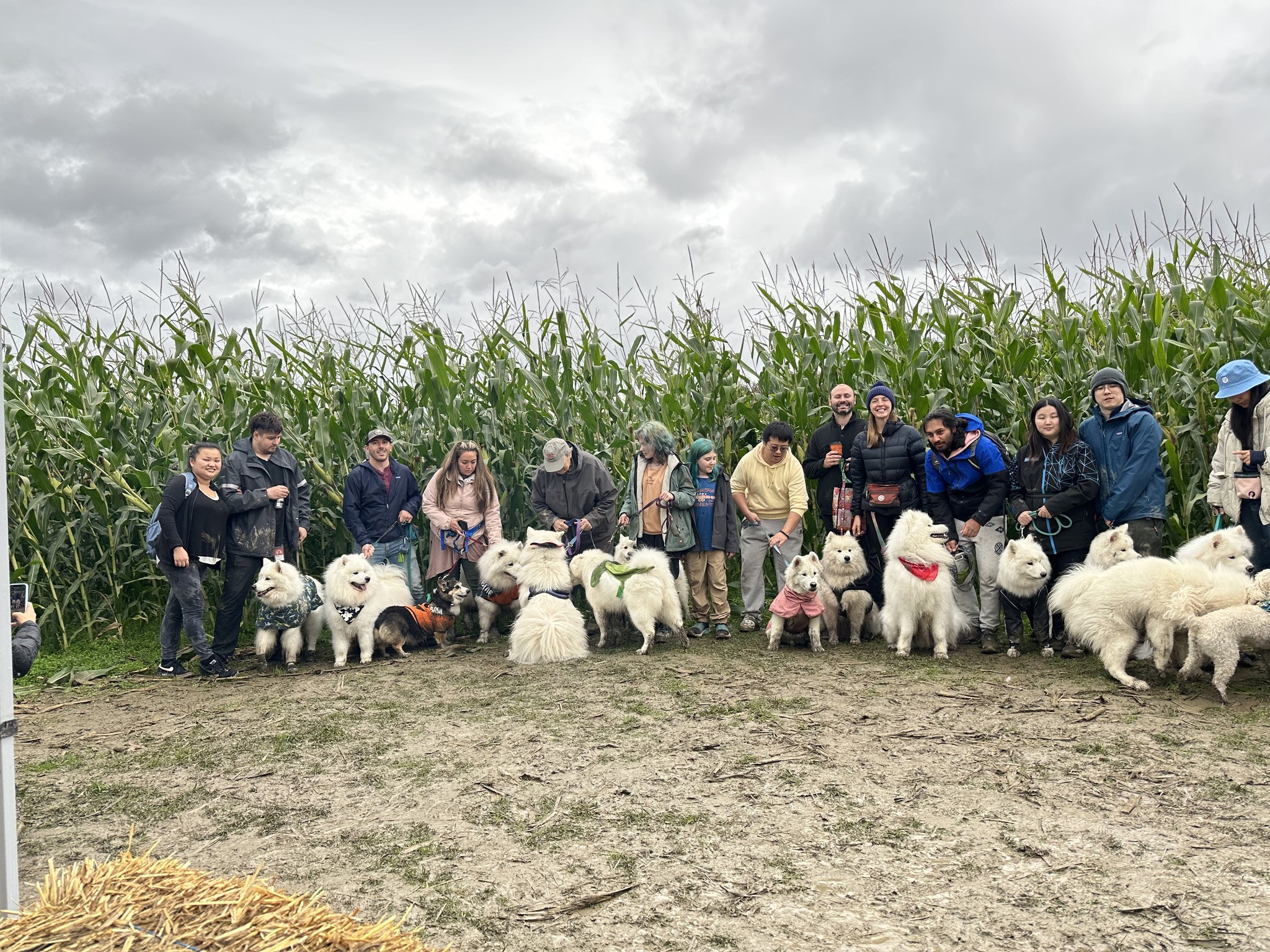
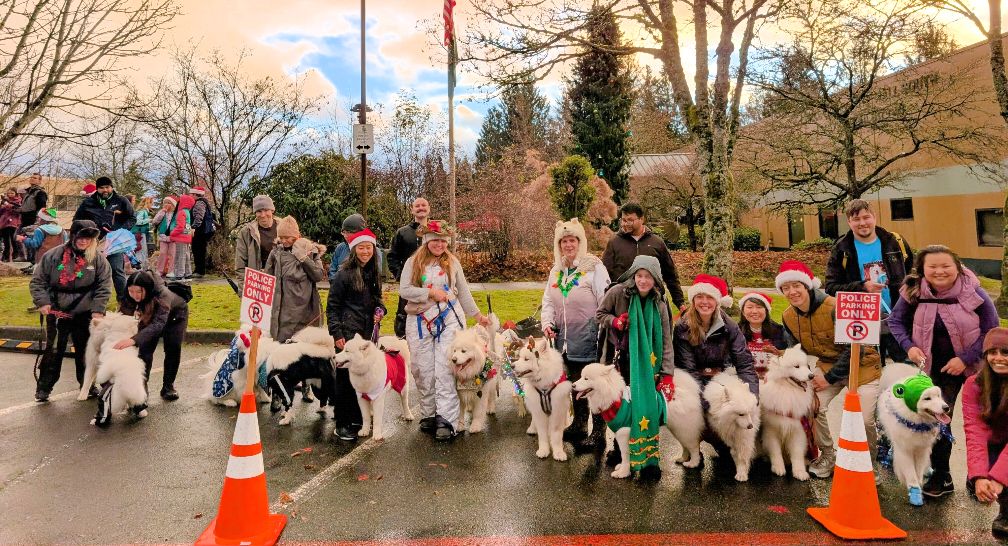
Started in the Puget Sound region, the Samoyed Club of Washington State has been around for more than 30 years. Focusing on helping the community to understand our unique breed through social events, education, and experiences.
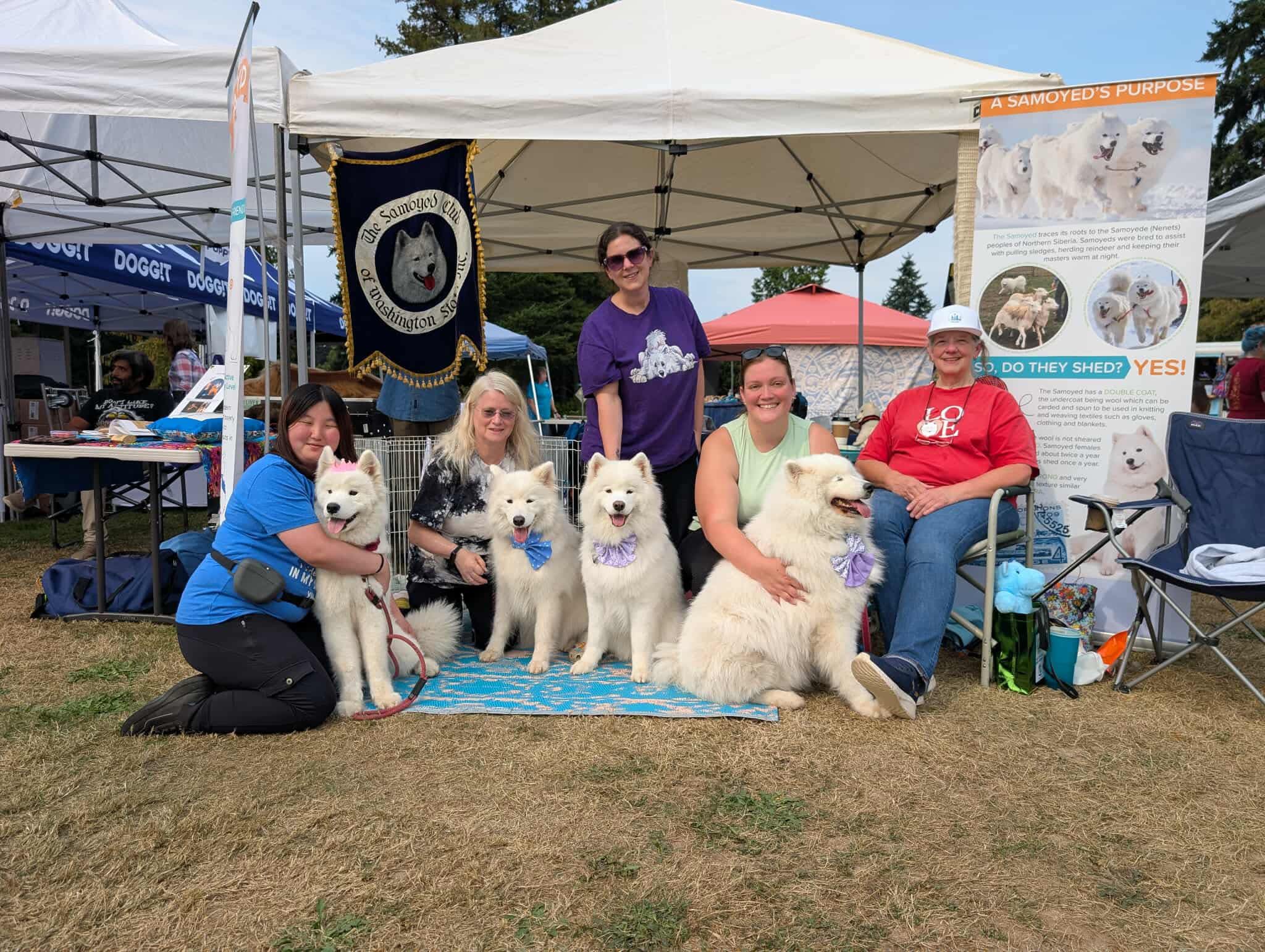
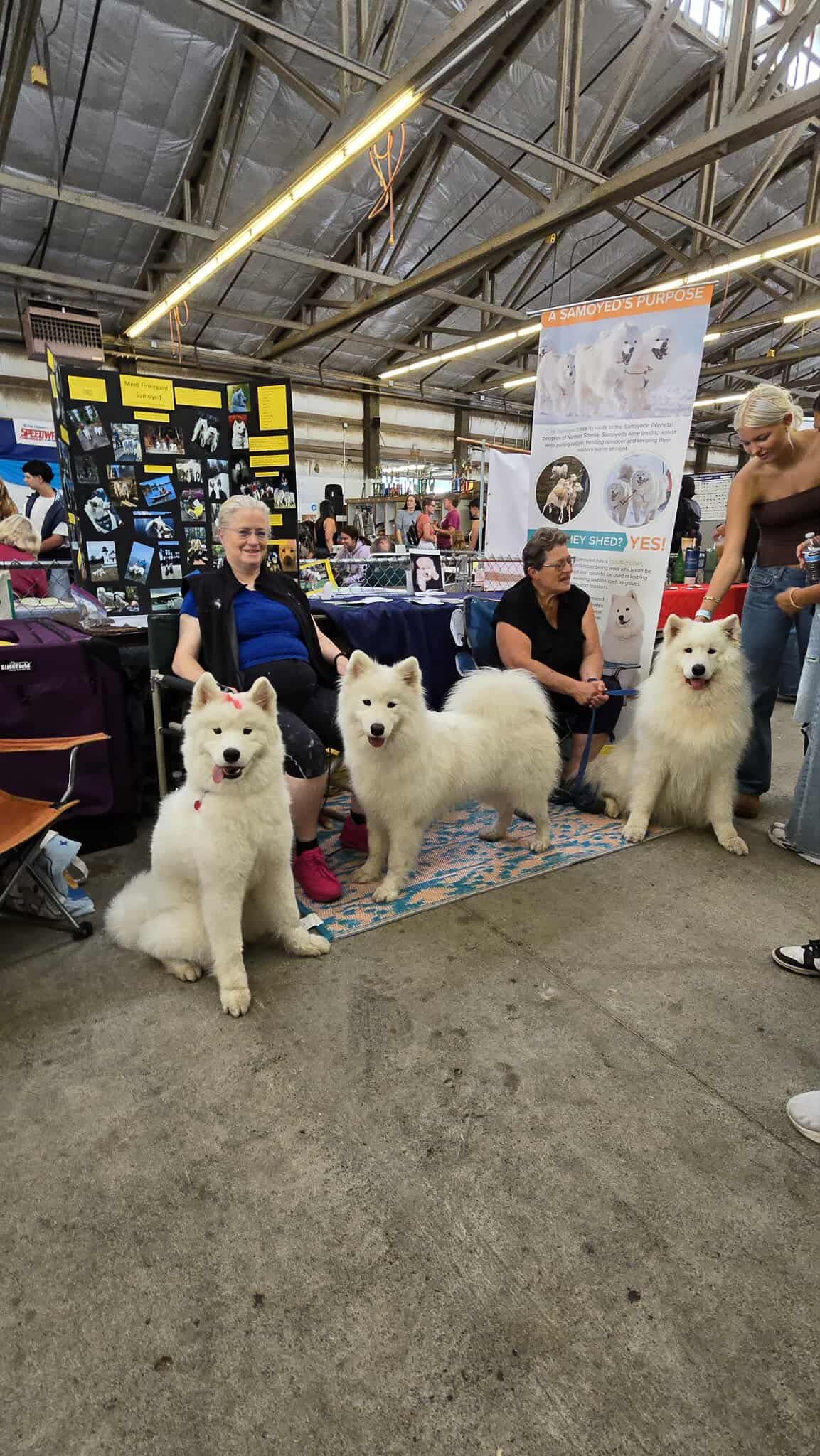
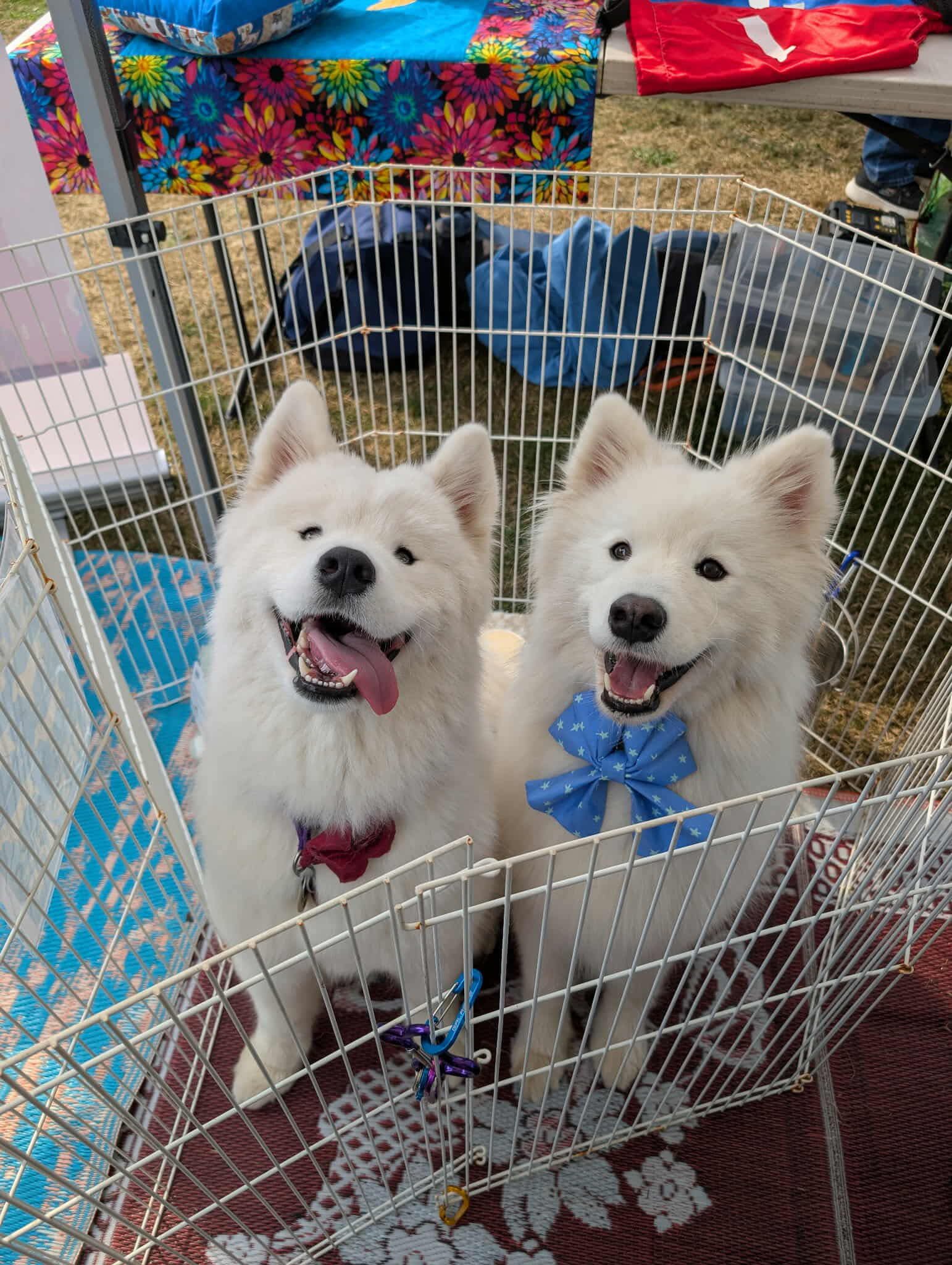
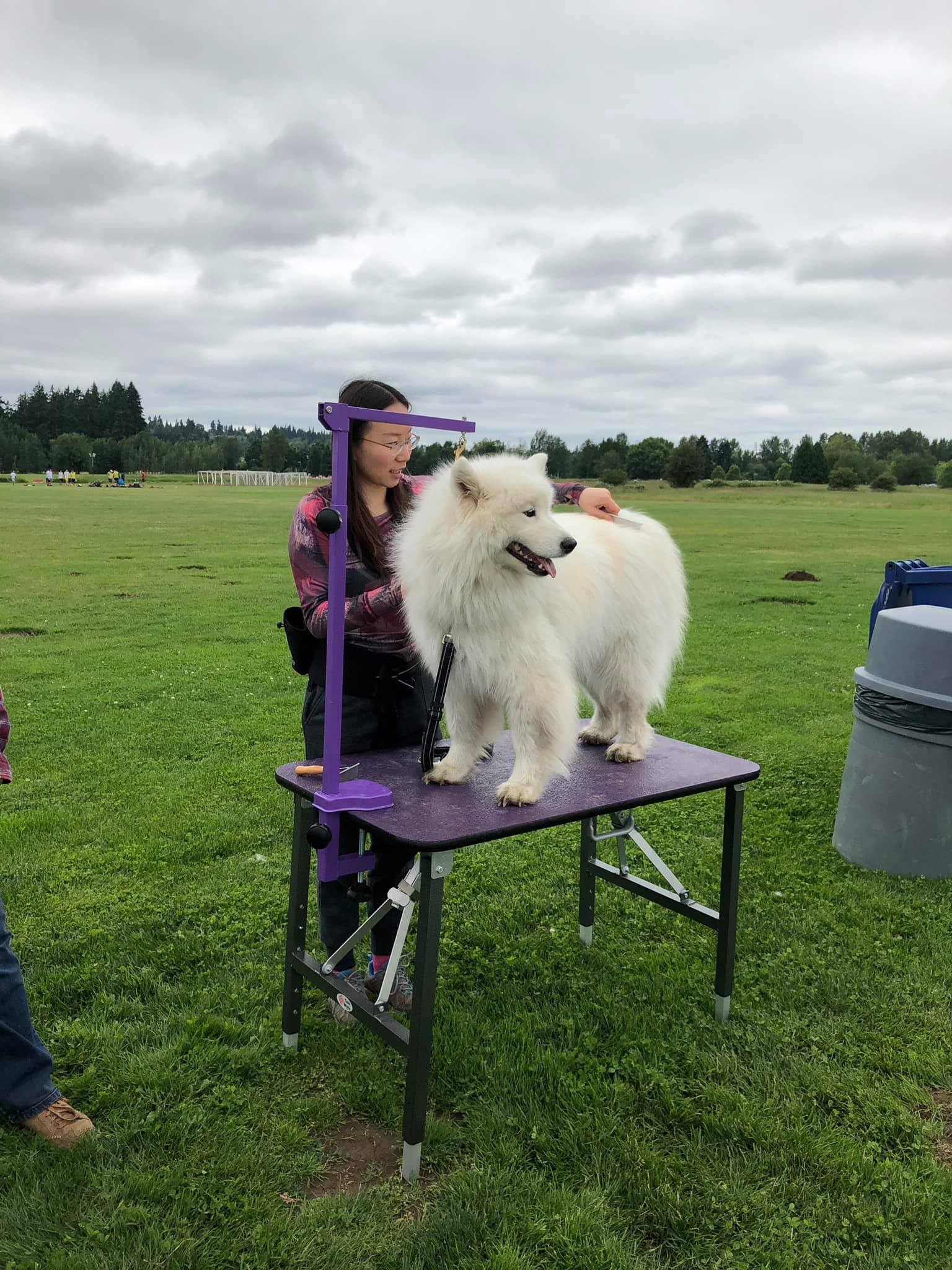
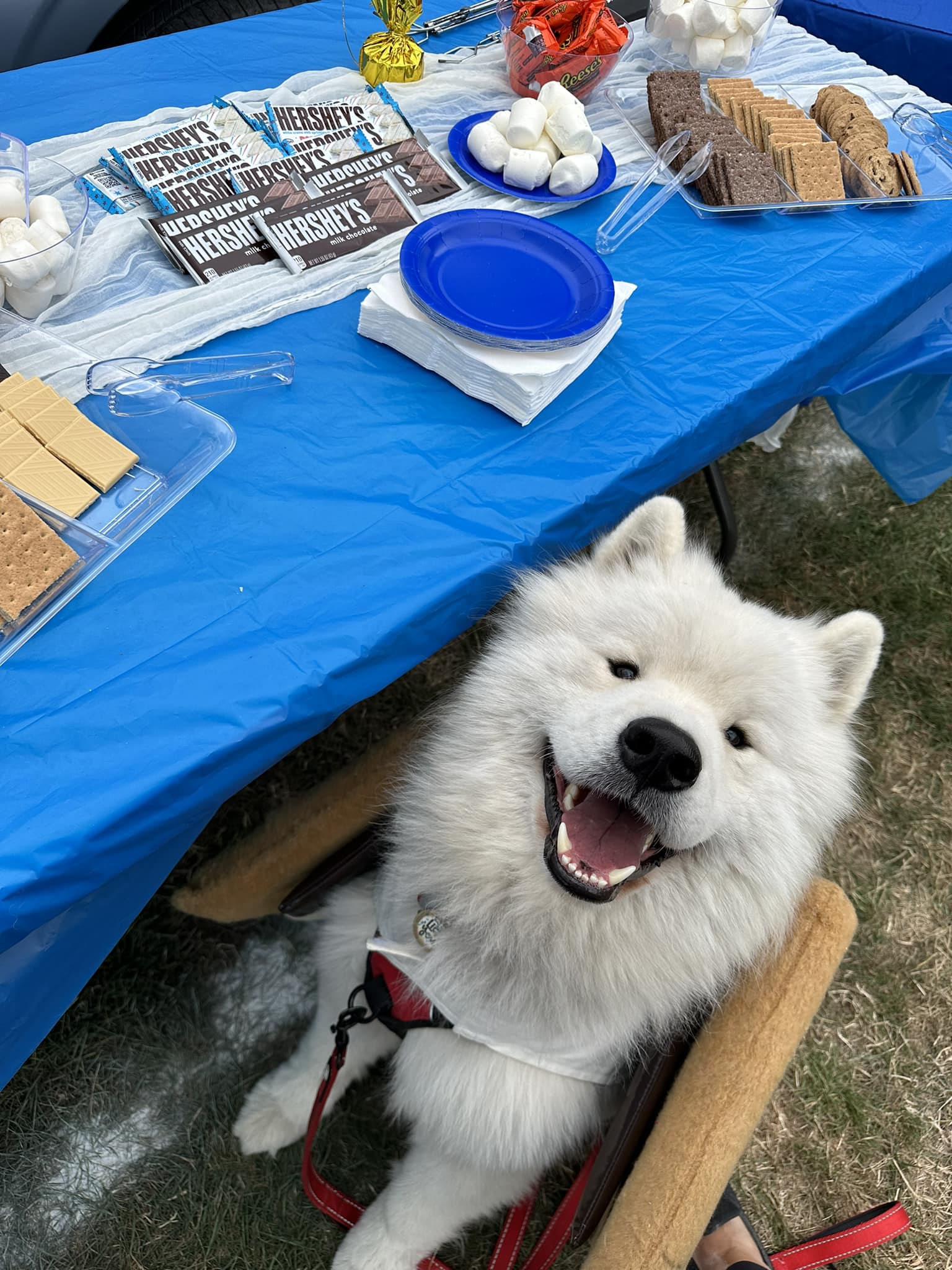
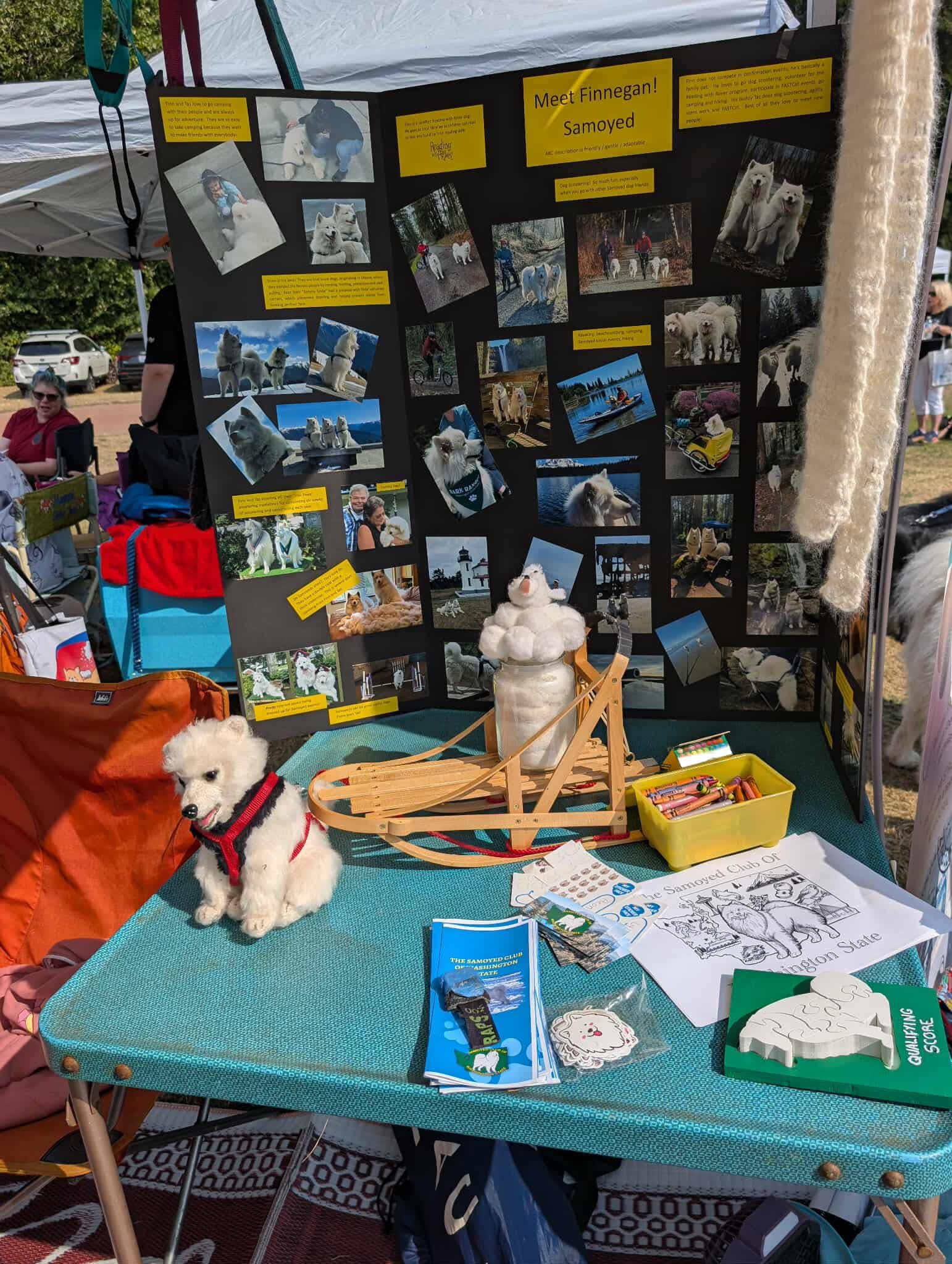
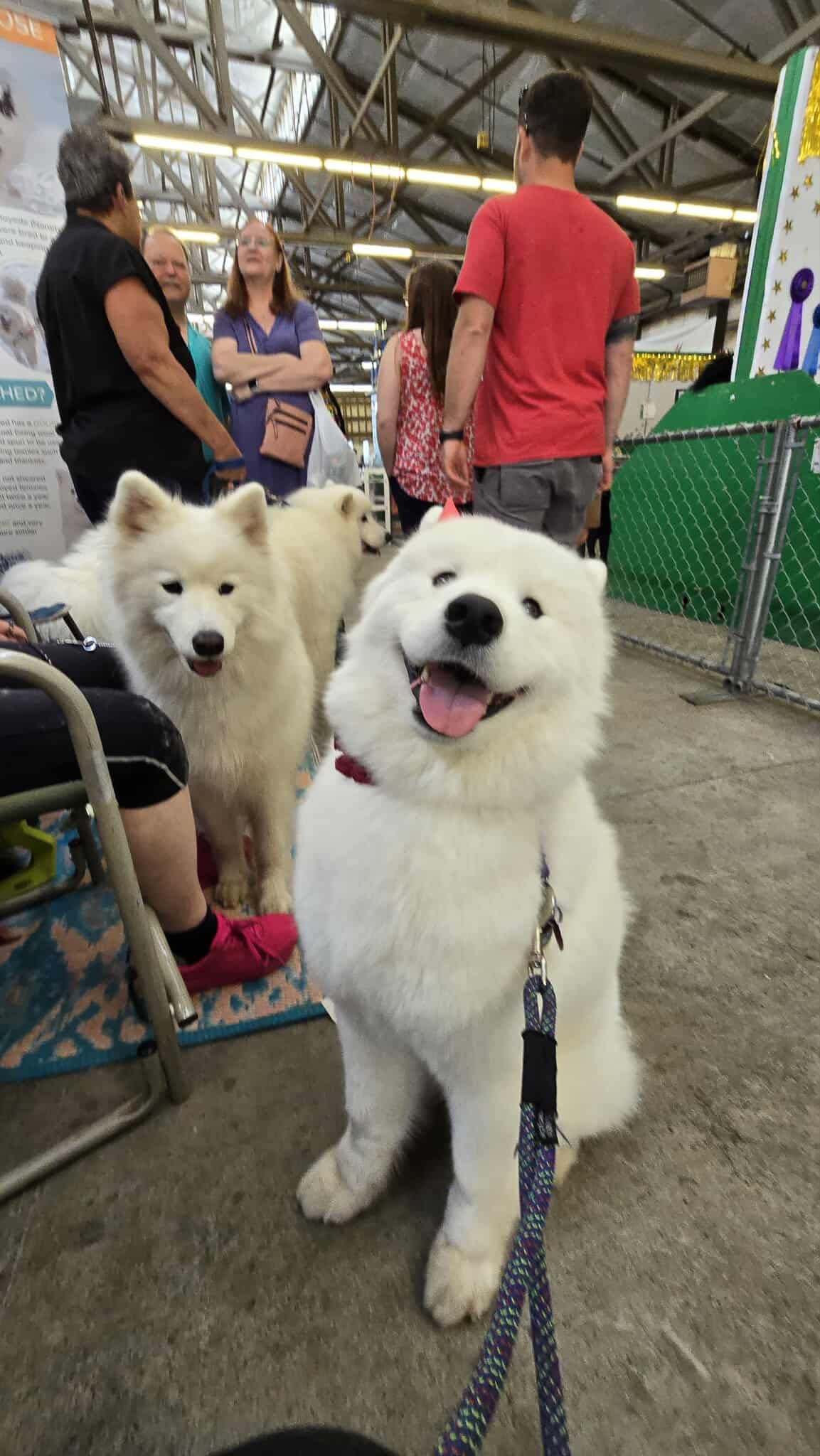
Several club members attended WagFest 2025 as a breed booth
Questions about the breed
Yes! Samoyeds are a double coated breed, which means that they shed or "blow" their undercoat - that soft, dense, "fluffy" hair closer to the skin. You should never shave a Samoyed down like some other dogs, because it ruins their fur's ability to cool themselves!
Absolutely! As a general rule, Samoyeds are even tempered and good natured, steady dogs who are happy as long as they are with their pack. Most are content to eagerly participate in whatever the family's mood and activity is for the day, whether that be lounging around watching movies or going for a five mile run. However, please keep in mind that there are ranges within each dog and kennel line - some are going to have more "drive" and therefore be higher energy, while others are going to be more laid back and just as happy as a therapy dog "reading" with kids at the library. Please do your research and talk to multiple breeders and learn about the traits inherit to their kennel before you invest in a puppy!
..."Easy" is probably not the right word. If you are looking for an eager to please, "will work purely for vocal praise" dog, then a Samoyed is not going to be for you. While it is in their nature to want to please, they are also a WORKING/Herding breed. Which means that a) they are naturally independent thinkers (and problem solvers), b) they are a dog that needs a job, and c)they definitely have an active sense of humor, so you better have one too! This is not a breed that is content with you throwing a ball and them retrieving it twenty times in a row. They are MUCH more likely to retrieve said ball the first two times, and then the third time they will look at you, look at the ball, look at you again and flip you the furry finger, then turn the retrieval game into a game of "TAG - you're it!"
Training games - starting from a young age - and consistency from all the humans of age in the household is the way to go with this wickedly intelligent breed.
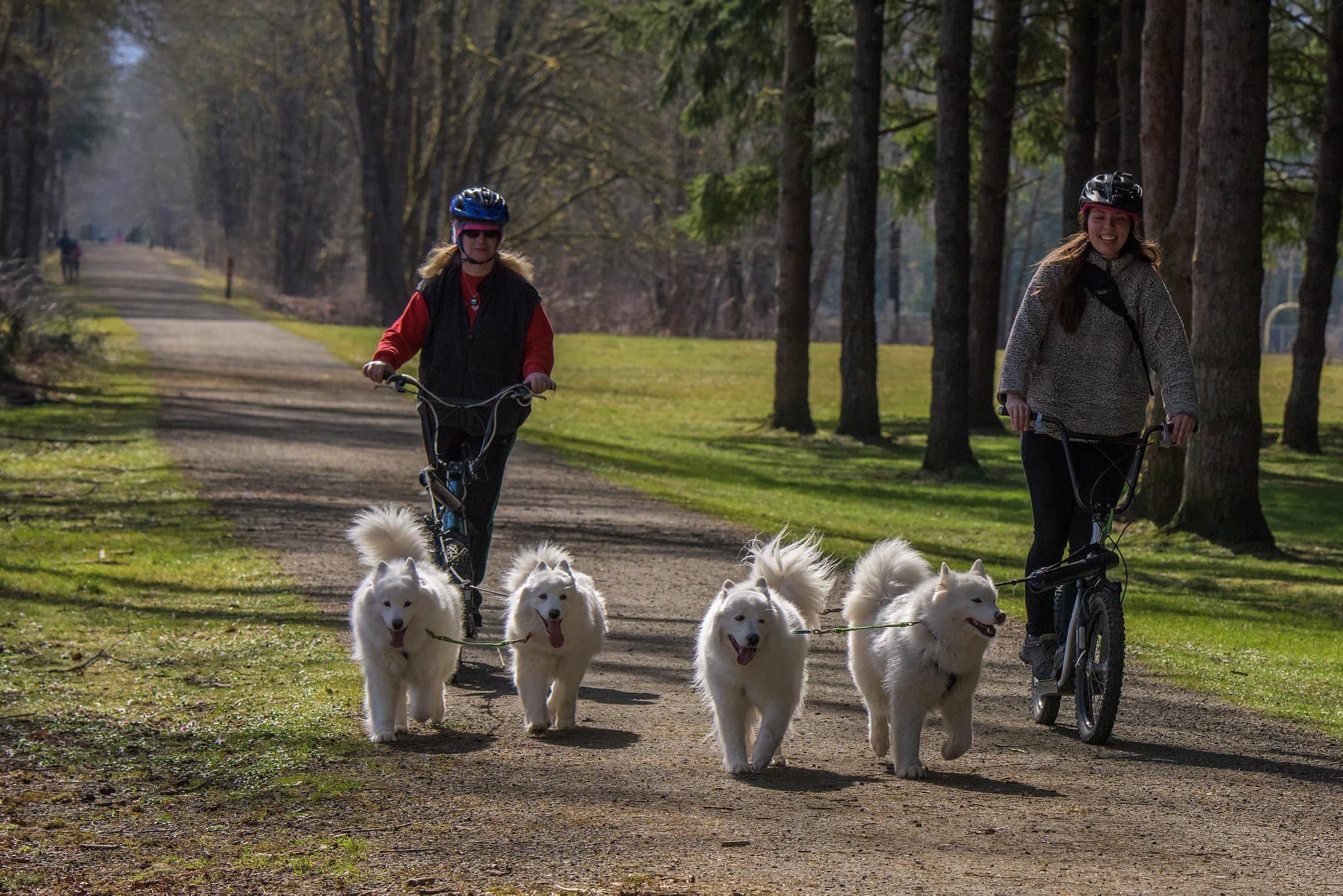
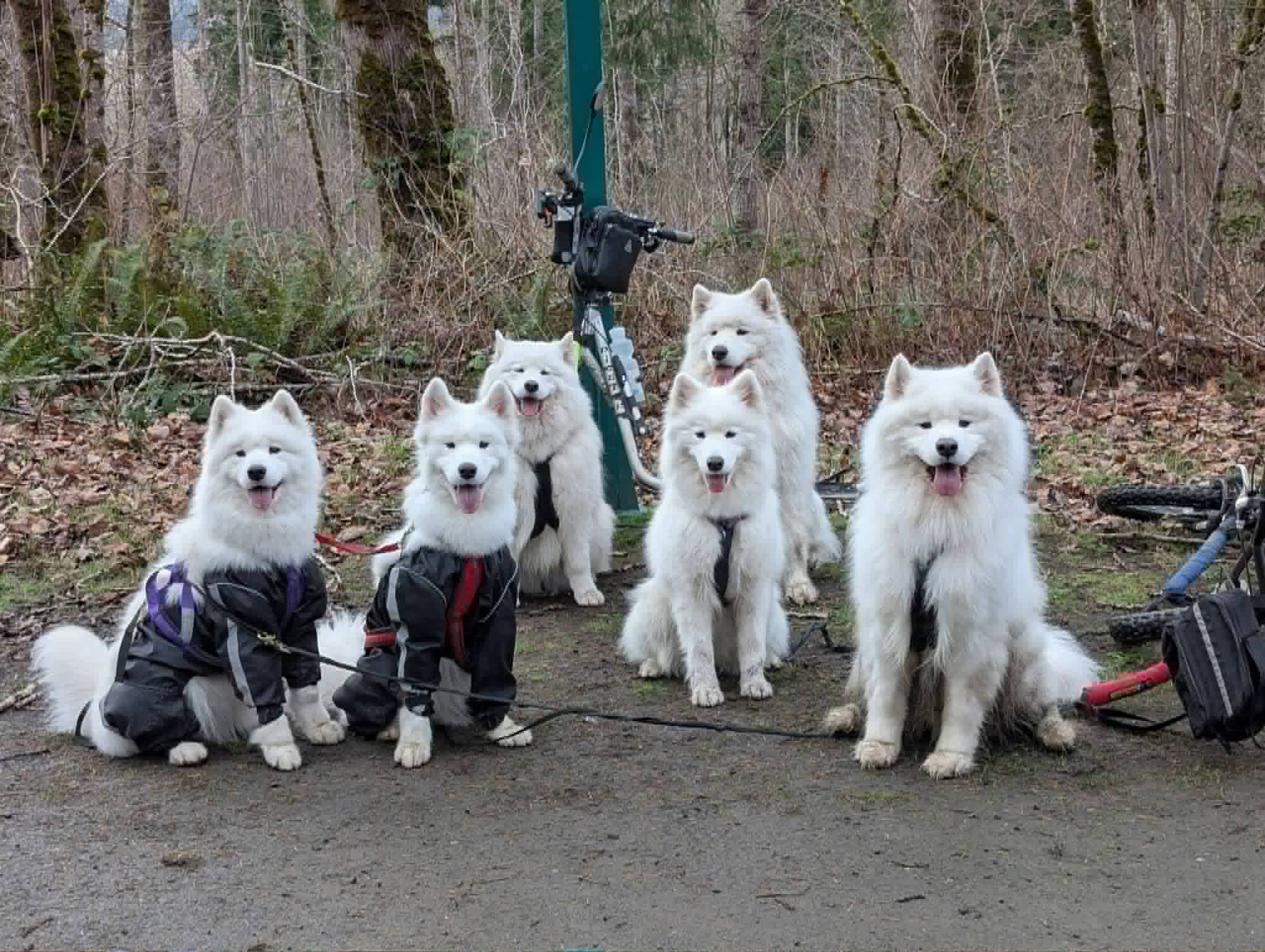
It really just depends on your activity level! Samoyeds love to play in the snow, pull sleds, eat snowballs, and go for hikes or runs. You can take your Samoyed scootering - a form of sled team practice without the snow. Many do agility, nose work, weight pulls, and barn hunts! It really just comes back to your interests and we're glad to help you find those interests!
Absolutely! As a general rule, Samoyeds are even tempered and good natured, steady dogs who are happy as long as they are with their pack. Most are content to eagerly participate in whatever the family's mood and activity is for the day, whether that be lounging around watching movies or going for a five mile run. However, please keep in mind that there are ranges within each dog and kennel line - some are going to have more "drive" and therefore be higher energy, while others are going to be more laid back and just as happy as a therapy dog "reading" with kids at the library. Please do your research and talk to multiple breeders and learn about the traits inherit to their kennel before you invest in a puppy!
Listed on our contact page is the link to the list of breeders in our area. Please feel free to ask us questions on our Facebook Group, email us, or you can look at our main organization, Samoyed Club of America!